At Boone Center, we believe every person brings unique strengths, and we’re committed to building pathways to meaningful employment that honor those talents. We offer a continuum of programs to foster a supportive environment for adults with intellectual and developmental disabilities to learn new skills and to gain confidence and independence. We have the privilege of working with members of the disability community during and after high school: with summer programs for students, and employment programming for individuals age 18 & up.
If you or someone you know is exploring job opportunities for disabled adults, BCI can help. Read on for more information about how we support individuals across a diverse spectrum of abilities and lived experiences.
Who We Serve: Disabilities Represented in Our Workforce
Intellectual Disabilities (IDD). There are a variety of intellectual and developmental disabilities, which can impact a person’s ability to problem-solve and learn new skills, affect communication and social interactions, and may also include other sensory sensitivities. We know there’s no one-size-fits-all approach to intellectual disability careers and employment opportunities — which is why our programs are designed to meet individuals where they are and support their own unique journey.
For example, every BCI employee is encouraged to set goals that track one hard skill, one soft skill, and one behavioral goal. Regular meetings with support staff help ensure employees and students at the BCI Skills Center have the tools to make progress they can be proud of.
Learning Disabilities. Whether it’s assembling products, working onsite at a vocational partner company, or managing warehouse tasks, individuals with learning disabilities receive the time and tools they need to learn effectively. BCI employs multisensory instruction, repetition, hands‑on learning, and flexible pacing. We aim to build job competence and confidence through methods that meet the needs of each individual.
Autism. Adults on the autism spectrum receive customized training and job placement support that aligns with their strengths, schedules, and sensory needs. For nonverbal or highly sensory-sensitive participants, our structured environments and supportive coaching help them thrive. We also offer helpful accommodations, such as providing noise-canceling headphones.
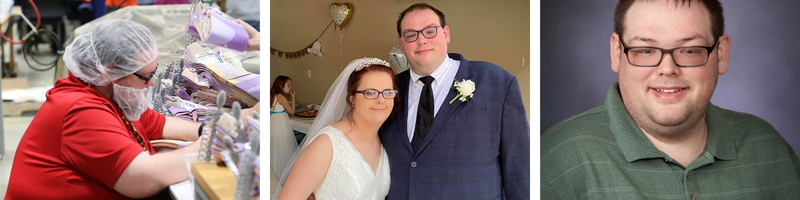
Adam Frey is one of many adults with autism who have a BCI success story. After starting in our Organizational Employment program in 2014, Adam joined our staff as a Quality Auditor before enrolling in the Salesforce training program at the BCI Skills Center. Adam currently works in inventory with one of our vocational partner companies, at True Manufacturing.
ADD, ADHD & Bipolar Disorder. Variety and movement can be powerful allies for those with neurological conditions, such as attention deficit disorder (ADD), attention-deficit/hyperactivity disorder (ADHD), and bipolar disorder. The BCI Skills Center offers diverse, task-oriented programs that provide structured yet dynamic environments to help participants maintain focus and support their preferred learning styles.
Cerebral Palsy. Adults with cerebral palsy participate in our vocational training and employment programs, where assistive technologies, adapted work environments, and individualized coaching enable them to perform successfully. In 2024, BCI restructured its production floor and completed set-works system upgrades to increase the availability of accessible workstations for participants with different physical needs and levels of stamina. These accessible workstations also accommodate the use of a wheelchair.
Spina Bifida. Modified workstations and adaptive techniques help individuals with Spina Bifida succeed in an environment that supports mobility differences. Seated production work, or benchwork, is typically a good fit for employees with Spina Bifida. They are also released early to and from the work floor, providing additional space to get where they need to go.
Down Syndrome. BCI is proud to have hired countless employees with Down Syndrome over the years. Since these participants may have specific transportation needs, BCI also offers a paid “Extra Innings” before- and after-work program, beginning at 7am and ending at 5pm on weekdays (4pm on Fridays). This program provides a safe place to socialize or learn new skills for participants who rely on another family member or caregiver for transportation.
Reducing the barriers to participating in a work program for adults with Down Syndrome is a win-win solution for participants and their loved ones. A client’s father once shared that his son “loves his job because here, he is not ‘special’ — he is normal.”

Visual Disabilities. Boone Center provides adaptive tools, tactile methods for task completion, and close supervision for blind adults and adults with other visual disabilities who are interested in employment. Ali, a longtime BCI employee who was born blind and also lives with developmental disabilities, learned how to build medical curtains through regular 1:1 training sessions. Our consultative approach is designed to help identify what each person needs to be successful on their terms.
Boone Center Offers a Continuum of Support
The above is not an exhaustive list of disabilities represented in the BCI workforce, which has also included brain and head injuries, Fetal Alcohol Syndrome (FAS), partial Trisomy, seizure disorder (epilepsy) and other unique conditions. By offering these examples, we hope individuals as well as their families, caregivers, supporters, AND employers in the community will see there is room for all types of people in the modern workforce — all it takes is determination and a willingness to think creatively.
Boone Center offers an Employment Continuum designed to form a supportive ladder: meeting each person where they are, empowering their growth, and enabling long-term, meaningful employment. Our commitment to serving disabled individuals is unwavering. With a focus on abilities (not labels!) BCI builds pathways to fulfillment and independence in the workforce.